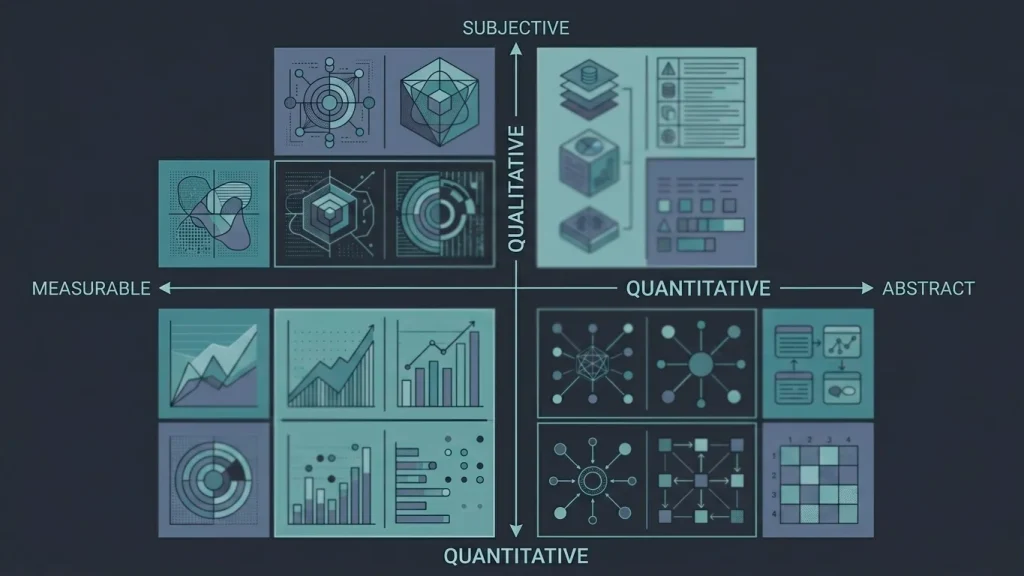
Compare the Categories of Operators in This Niche

This page deliberately names no operators. Instead it maps the non-GamStop niche by category, because the useful question is not “which brand” but “which kind”, and a kind tells you far more about the risk than a name does.
Spot Why Categories Beat a Ranked List
The commercial pages in this space publish ranked lists of named operators. Those lists change constantly, and the most-marketed names frequently resolve to a small number of corporate networks rather than independent businesses.
A category, by contrast, is stable and predictive. Knowing that a site is, say, a recently launched crypto-first operator on a low-cost licence tells you the likely risk profile regardless of what it is called this month. That is why this guide treats categories as an analytical tool, not a shopping list, and why no category here is “recommended”.
The categories overlap with the jurisdiction differences set out in our comparison of the licensing jurisdictions behind them, and they are most useful read alongside the verification routine.
It is worth being blunt about why named lists are so unreliable in this niche. Independent trade reporting has repeatedly shown that many of the most heavily marketed “non-GamStop” brands belong to a handful of corporate networks rather than being the independent operators they appear to be. Affiliate listings also routinely misclassify UK-licensed brands as “non-GamStop”, which is simply wrong, since those brands are on the scheme. A category-based view sidesteps both problems by describing structure and behaviour instead of trading on names that may change or mislead.
Compare Operators by Jurisdiction
The licence an operator holds is the strongest single signal, so jurisdiction is the first axis.

- Malta (non-UKGC)
- EU-based regulator with a public register; the higher-credibility end, but still outside UK protection.
- Curacao
- The most common offshore licence here, reformed under the 2024 LOK to direct licensing; moderate and reforming, but the regulator handles no player complaints.
- Kahnawake
- Longer-established and niche, with a local server-hosting requirement; still not the UKGC.
- Anjouan
- Very low cost and fast, with the UK listed as an excluded territory under its own licence terms.
- Costa Rica
- No gaming regulator and no register; effectively unregulated for gambling purposes.
To confirm any claimed licence in these jurisdictions, follow the steps in our guide to verify a licence on the register.
Compare Operators by Specialisation
The second axis is what an operator concentrates on. These specialisations exist largely because UK rules restrict the very features they promote.

- Slots-only
- Heavy slot libraries, often including high-volatility and bonus-buy features that UK rules limit. UK online slots are capped at 5 pounds per spin for players aged 25 and over and 2 pounds for those aged 18 to 24, with a minimum 2.5-second cycle, none of which binds offshore sites.
- Live-only
- Focused on live dealer tables and game shows, sometimes with higher table limits than UK-licensed sites typically offer.
- Crypto-first
- Built around cryptocurrency deposits and withdrawals, which are effectively absent on UKGC sites and common offshore, partly to route around bank blocks.
The UK measures driving these specialisations are recorded on legislation.gov.uk, and the official self-exclusion scheme they sit alongside is set out at GamStop.
Compare Operators by Market-Entry Era
When an operator entered the UK-facing offshore market is a quieter but useful signal.

Older, established operators predate the tightening of UK rules and have longer track records, for better or worse. A newer wave grew specifically after GamStop became a mandatory licence condition in 2020 and after the 2025 measures, including stake limits and financial risk assessments. Newer entrants are not automatically worse, but a very recent launch combined with a low-cost licence and aggressive bonuses is a combination worth treating cautiously.
Spot the Categories by Risk Profile
The final axis collects the risk markers that cut across the others.

- No UK player protection
- Every operator here sits outside the UK Gambling Commission, so none offers UK fund-segregation guarantees or affordability safeguards.
- Dispute resolution without enforcement
- Some jurisdictions offer an alternative dispute process on paper, but with limited power to enforce an outcome a player cannot rely on it.
- Deferred verification patterns
- Lighter sign-up checks that defer identity verification until a first withdrawal, which is where disputes commonly surface.
- Network-rotation behaviour
- Independent trade reporting has documented corporate networks that change entities and licences under pressure, a pattern to recognise rather than a brand to name.
How these risks play out in practice for a UK player is the subject of our wider guide to what each category means for protection.
Compare Operators by Funding Pattern
A fifth, practical axis is how an operator handles money, because the payment rails a site relies on often reveal what its licence cannot secure.

Some operators still lean on cards and mainstream e-wallets, which generally signals a licence credible enough for those providers to engage. Others depend heavily on prepaid vouchers and cryptocurrency, frequently because UK banks and card issuers may block transactions to offshore gambling sites and because the UK credit-card ban introduced in April 2020 does not bind operators abroad.
A site that can only be funded through crypto or obscure rails is not offering a convenience so much as revealing a gap. When mainstream finance will not touch an operator, that is information worth weighing before depositing.
Verify How to Use This Map
A category is a lens, not a verdict. Two operators in the same category can differ, and a category never substitutes for checking the specific licence on the register.
Used well, the map narrows the field and sets expectations: it tells you what questions to ask and what risks to weigh before going further. Used badly, as a list of “types to pick from”, it would defeat its own purpose. Nothing here is an endorsement of any category, and the safest position for anyone in active self-exclusion remains not using these sites at all.
The strongest single takeaway is that the axes reinforce each other. A low-cost licence, a very recent launch, a crypto-only funding pattern, and an aggressive bonus offer tend to cluster together, and when they do, the combined signal is far louder than any one factor alone. Reading the categories together, rather than in isolation, is what turns this map into a practical filter.
Compare Offshore Licensing Jurisdictions Behind Non-GamStop Sites
Prepared by the Casino not on GamStop editorial staff.